
October 07, 2026 By Benjamin Vaughan, Ph.D. , Lucas Freeman, Ph.D.
Categories: Energy Efficiency , Storage , Climate Change , Biofuels , Clean Energy , Energy Policy , Energy Storage , Energy , Infrastructure , Renewable Energy , Carbon Dioxide Removal , Carbon Storage , Batteries
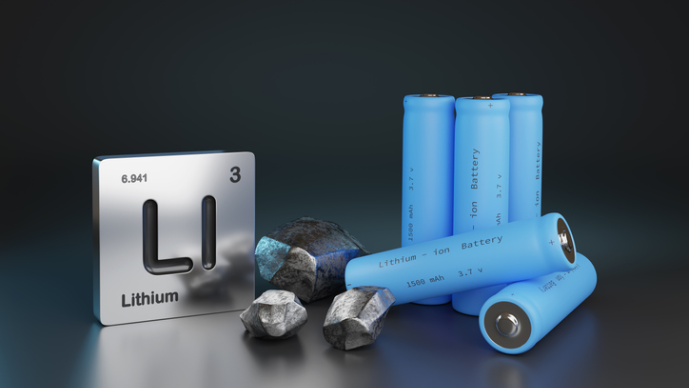
The critical minerals sector sits at the intersection of several rapidly evolving areas within national security and energy policy, international trade law, and intellectual property. In recent history, the United States has imported many of these minerals from global trade partners due to a number of economic and cultural factors including: domestic supply limitations, environmental impacts, workforce and demographic shifts, technological constraints, and the existence of cheaper international suppliers. However, amid ever-increasing demand and dramatic changes to international trade relationships, the push for developing domestic sources of critical minerals has become a political and scientific priority. This article provides a high-level overview of the United States domestic critical minerals industry, highlighting illustrative challenges and opportunities in sourcing and refining, as well as major targets for technological development in this area.
What Are Critical Minerals?
Scientifically, "critical" is not a property of any mineral itself, but is a descriptor identifying a mineral with a high societal value (e.g., for energy, medicine, or military applications) and a supply chain that is significantly constrained.
These challenges are reflected in the U.S. Federal Government’s legal definition of a critical mineral as well. A "critical mineral" is defined under Section 7002 of the Energy Act of 2020 as any mineral, element, substance, or material designated as critical by the U.S. Geological Survey (USGS) because it:
The statute expressly excludes fuel minerals; water, snow, and ice; and common varieties of sand, gravel, stone, pumice, cinders, and clay. The current iteration of the list and formal definition of critical minerals was officially put in place by the Energy Act of 2020, which also requires that the list be updated at least every three years.
The most recent list was finalized in 2025, and the methodology used by the USGS to determine mineral inclusion was updated from previous years to include consideration of a mineral if the annualized, probability-weighted net decrease in U.S. GDP from supply disruption would exceed $2 million. To illustrate, a complete restriction of rhodium imports from South Africa was estimated to decrease U.S. GDP by $64 billion, with a 3.9% probability. In the draft rankings, samarium (majority imported from China) and rhodium (majority imported from South Africa) ranked at the top.1
Nearly all of the geopolitical challenges and supply chain vulnerabilities are inextricably linked to geological and physical limitations inherent to our planet and the elements themselves. Many critical minerals are, to begin with, intrinsically extremely rare in Earth's crust (approximately millions to billions of times less abundant in the crust than silicon) and/or are concentrated in only a few extremely localized geologic settings (e.g., a specific rock formation in one country). This gives the countries where these elements do naturally occur in high abundance tremendous leverage in international trade involving these commodities. Additionally, some critical minerals are not mined for their own sake at all, but are byproducts recovered during the production of more common minerals/elements—usually because the critical mineral is only present as a trace component of the ore containing the more common mineral.2 In certain cases, like the platinum-group elements discussed below, multiple critical minerals generally occur together within the same ores, and cost-effective separation and purification can be challenging.
Why does the US care?
As discussed above, critical mineral supply chains often combine one or more features that, together, create unusual risk to domestic supplies.
Import reliance data quantify the problem. According to USGS's 2025 review, of the 58 nonfuel minerals on the list, the United States was 100% net import reliant for 13 and more than 50% import reliant for another 20. China was a major source for 14 of those 33. China produced approximately 82% of the world's tungsten in 2025.3 That concentration has become political and economic leverage. In October 2025, Beijing significantly expanded export controls on rare earths (17 elements), related products, processing technology, and expertise.4
Similarly, China also controls roughly 70% of global refining capacity for many of the most strategically important minerals. Meanwhile, demand for lithium, rare earths, cobalt, graphite, nickel, and other critical minerals is projected to grow exponentially, driven by electric vehicles, grid-scale battery storage, defense systems, semiconductors, and AI-powered data centers. The US has significant geologic resources but, for various economic, environmental, and cultural reasons, has allowed its domestic mining and mineral processing industry to shrink over the past three decades in favor of more affordable imports.
The list matters precisely because it drives policy and creates a number of significant new price signals throughout the supply chain: designation as a member of the list informs federal investment, triggers stockpiling, unlocks tax incentives for processing, and streamlines permitting.5
Case Study: Palladium
Palladium, a platinum-group element essential to catalytic converters for automobiles and other catalytic applications, is a useful case study for understanding the factors underpinning designation of a mineral as “critical.” Palladium is roughly one billion times less abundant than so-called “rock-forming” elements such as silicon, aluminum, and iron. Economically viable concentrations form only in rare magmatic (igneous) settings, so global supply is highly concentrated in locations where these igneous structures occur close to the surface.
U.S. import data for palladium reflect that geology and its geopolitical consequences. Nearly two-thirds of imports thus come from two countries (Russia, 32%; South Africa, 32%),6 making the supply chain for this mineral that is key to automotive, pharmaceutical, and commodity chemical production technology vulnerable to geopolitical shifts. Thus, identifying domestic sources is key to maintaining our access to this mineral.
What are companies doing in this space?
Innovation in the domestic critical minerals sector generally falls within one of the following categories:
The tools for finding and targeting domestic critical mineral deposits are changing quickly, and the main shift is combining modern sensing data with artificial intelligence. At the national level, airborne magnetic, radiometric and lidar (laser-based topographic) surveys are being flown over areas with critical mineral potential to re-map U.S. geology both at and below the surface. These radiometric surveys can expose unusual features linked to critical mineral deposits that would otherwise have gone undetected. High-altitude hyperspectral imaging is also being used to identify minerals at the surface by matching the light reflected from rocks against reference libraries of mineral signatures. Geologists then confirm those readings on the ground with backpack-mounted spectrometers.
Artificial Intelligence (AI) and Machine Learning (ML) are also being heavily utilized to improve mining. Specifically, AI is being used to convert scanned historical geologic maps into usable data and aggregating scattered mineral records into a single usable format. ML is also being used to detect concealed deposits and generate drill-ready targets, as well as to locate critical minerals in unconventional sources such as coal refuse piles. Finally, AI is being harnessed to interpret aggregated geophysical datasets to create new drilling, sensing, and analysis tools. These tools are designed to characterize ore bodies faster, at higher resolution, and at lower cost, and to shorten the time (cost) from discovery to production.
Technology development in critical minerals refining is centered on making separations more selective and less chemical-intensive, especially for recovering minerals that occur at low concentrations in complex feedstocks. Solvent extraction remains the standard method for separating rare earths, but its poor selectivity can require 50 to 200 extraction cycles, generates large volumes of chemical waste, and can take days to weeks.
Deep neural networks are being trained to identify new extractive chemicals by predicting how they will perform, replacing trial-and-error screening. Others are moving selectivity to the start of the process, using specialized chelating agents that leach high-value heavy rare earths preferentially from mining waste and industrial residues, which reduces the burden on later purification steps. Biological approaches, such as the use of metal binding proteins to capture rare earths from acidic mine water. The common goal is to make legacy tailings, coal byproducts and industrial wastewater economically viable sources of critical minerals.
Materials once discarded as waste, such as mine tailings, refinery residues, coal byproducts and industrial wastewater, are now being treated as critical mineral feedstocks. To find recoverable material, national mine-waste sampling programs and machine-learning resource models are being used. AI-designed polymers that capture specific ions and custom binding agents that allow separation by distillation even at low concentrations are being used to recover minerals from wastewater and acid mine drainage. Modern selective leaching, solvent extraction and ion exchange are also being used to recover metals at lower concentrations than older methods. Biological solutions are also being employed to extract critical minerals from waste products such as metal sulfides, which were previously discarded due to the difficulty of conversion to elemental metals.
Technologies that avoid conventional hard-rock mining are increasingly focused on pulling critical minerals out of fluids that are already brought to the surface. Water produced from oil and gas wells is a leading example. It can be ten times saltier than seawater and was long treated as waste to be reinjected or heavily treated, but it also contains lithium and other valuable materials. For example, Direct lithium extraction (DLE), which pulls lithium straight from brine instead of using large evaporation ponds, generally relies on adsorbents, ion exchange or solvent extraction, where newer methods include low-cost aluminum-hydroxide sorbents that capture about five times more lithium than earlier materials while using roughly a third of the energy.
Summary
Critical minerals are essential to many aspects of our society, and, in addition to their inherent supply constraints, are increasingly being used as instruments of trade policy. The 2025 list of critical minerals, with its expanded scope and data-driven methodology, signals that the federal government plans to continue using this designation to steer investment in an attempt to support domestic suppliers. US companies operating in this space are driving essential technology forward, while also navigating the rapidly changing geopolitical landscape, and exciting new opportunities continue to emerge.
1 Congressional Research Service, The 2025 U.S. Critical Minerals List, IF13145.
3 U.S. Geological Survey, 2025 annual review, Mining Engineering (May 2026).
4 Council on Foreign Relations, Leapfrogging China's Critical Minerals Dominance (Feb. 2026).
5 Congressional Research Service, The 2025 U.S. Critical Minerals List, IF13145.
6 U.S. Geological Survey, Mineral Commodity Summaries (Jan. 2025), Platinum-Group Metals.
