
October 14, 2026 By Sarah Main
Categories: Regulation , Energy Policy , Environmental Impact Assessment , Inflation Reduction Act , Permitting , Critical Minerals , Mining , Environmental Remediation , CERCLA , Superfund , Federal Funding
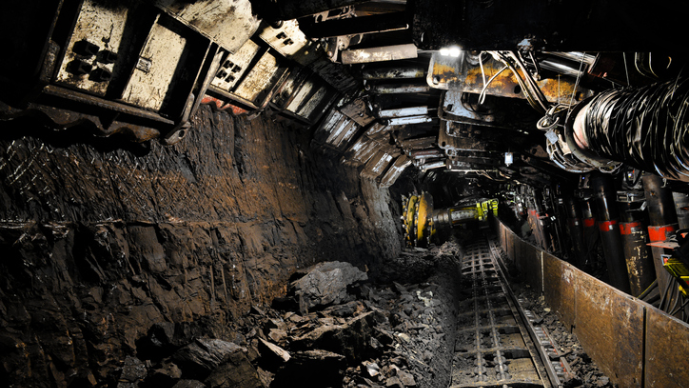
Historically, U.S. mine tailings have been treated as waste to be disposed of, not as a potential resource. That view is changing. The U.S. Department of the Interior now considers mine waste “one promising domestic source of critical minerals,” and federal agencies are moving to ease recovery of critical minerals from tailings while encouraging remediation.
This post examines the federal framework for recovering critical minerals from mine waste, the regulatory and financial barriers that have historically inhibited the sector, and the funding opportunities available to companies seeking to turn tailings into profit.
Domestic Potential
The United States imports essentially 100% of 13 critical minerals and more than 50% of another 20 critical mineral commodities essential to national defense, advanced manufacturing, energy infrastructure, and emerging technologies. China dominates extraction and processing of many of these materials.
Domestic tailings could help close that gap. A preliminary analysis by the U.S. Department of Energy (DOE) National Energy Technology Laboratory and the Idaho National Laboratory estimates that approximately 13,904 million metric tons of tailings across 189 major sites contain significant concentrations of rare earth elements, cobalt, gallium, germanium, indium, and platinum-group elements. For example, abandoned lead and zinc mines in Oklahoma have left behind waste rich in zinc and germanium. Researchers have also identified tellurium, which is vital for defense applications, in copper tailings at a Utah mine. Industry is already pursuing these opportunities: some mining companies estimate they could produce up to 800 million pounds of copper annually as soon as 2027 by leaching the metal from waste piles once considered worthless.
Reprocessing also offers environmental benefits. Legacy tailings sites can be sources of acid mine drainage, heavy-metal leaching, and dust. Reprocessing can remediate those conditions while recovering minerals.
The Current Political and Regulatory Framework
Fragmented regulation of domestic mining has historically impeded the expansion of the processing capacity needed to extract critical minerals from tailings. In recent years, Congress and the Executive Branch have taken a series of steps to address those barriers.
The Energy Act of 2020 created the first comprehensive statutory framework for federal critical minerals programs, including research on recovery from secondary and unconventional sources. The Infrastructure Investment and Jobs Act of 2021 then funded several programs explicitly targeting mine waste sites.
The Fiscal Responsibility Act of 2023 amended the National Environmental Policy Act (NEPA) to impose presumptive deadlines of one year for environmental assessments (EAs) and two years for environmental impact statements (EISs). The Act also allows agencies to rely on existing EAs and categorical exclusions for certain projects, which may include tailings recovery at previously permitted or remediation sites. That same year, the Federal Permitting Improvement Steering Council proposed prioritizing critical mineral projects for FAST-41 coordinated review, which offers a single coordinating agency, a predictable timetable, and a public permit tracking dashboard.
On March 20, 2025, President Trump issued Executive Order (EO) 14241, which directs federal agencies to expedite permitting for domestic mineral projects and prioritize federal lands for mining and processing, delegates Defense Production Act (DPA) authorities to support domestic mineral production, and broadens the definition of “minerals” to include copper, zinc, uranium, potash, and gold.
In July 2025, Congress enacted the One Big Beautiful Bill Act (OBBBA), which made some of the most sweeping changes to federal mineral-resource policy in more than a generation.
Later that month, the Department of the Interior (DOI) issued Secretarial Order (SO) 3436, which defines mine waste broadly to include waste piles, coal refuse, tailings, and discharges on federal, state, tribal, and private lands. The Order directs DOI bureaus and offices to review and, where appropriate, amend regulations and streamline processes to encourage private-sector recovery of critical minerals from mine waste. Implementation will determine how much these reforms benefit the domestic mining industry.
Regulatory and Market Barriers
Tailings reprocessing does not fit neatly into existing regulatory categories. Depending on the site, regulators may treat a project as mining, waste management, remediation, or a hybrid, creating uncertainty about which rules apply and which agencies have jurisdiction.
The legal status of minerals in tailings under the General Mining Law of 1872 is also uncertain, including whether developers can claim tailings as minerals or whether tailings are waste governed by other frameworks, and what royalties apply on federal land. Some sites also face title disputes among surface owners, mineral estate holders, and the federal government.
Environmental liability has been a significant barrier to private investment in legacy tailings recovery. Because the Comprehensive Environmental Response, Compensation, and Liability Act (CERCLA or Superfund) imposes strict, joint, and several liability, a party that disturbs contamination can become a potentially responsible party even if it did not cause the original pollution and its work improves site conditions. In some cases, cleanup liability could exceed recovery revenue by orders of magnitude.
State permits for water discharges, air emissions, and residual tailings add further layers of review. Permitting a new mine in the U.S. typically takes seven to ten years, compared with two to three years in Canada and one to two years in Australia. The practical effect of recent NEPA reforms on complex mining projects remains to be seen.
Funding and Government Program Opportunities
Several federal funding streams support these projects. A 2022 presidential determination under Title III of the Defense Production Act (DPA) made “by-product and co-product production at existing mining, mine waste reclamation, and other industrial facilities” eligible for support, and the Department of War has since made several hundred million dollars in DPA funding available, including for recovery from secondary sources. DOE’s new Office of Critical Minerals and Energy Innovation has also announced plans to issue nearly $1 billion in funding opportunities, including $275 million for “Mines and Metals Capacity Expansion,” $80 million for “Mine of the Future,” and $134 million for a “Rare Earth Elements Demonstration Facility.” On September 30, 2026, DOE announced $29.5 million in awards to 17 U.S. National Laboratory projects to accelerate the development of innovative technologies that expand and improve domestic mining capabilities.
Tax incentives are less certain. Inflation Reduction Act production tax credits mainly target primary production and recycling. The OBBBA phases out parts of the tax credit framework for critical minerals processing and advanced manufacturing and eliminates or accelerates the phase-out of key demand-side incentives, including under Sections 45X and 30D. Some policy proposals would extend Section 45X credits to minerals recovered from secondary sources.
Certain projects may qualify for Superfund cost recovery or brownfield redevelopment funding if they demonstrably improve site conditions. Several states also offer tax credits, infrastructure investment, workforce training support, or expedited review for critical mineral projects. Layering these incentives with federal support could make some otherwise marginal projects viable.
Looking Ahead
Ultimately, the main obstacles to recovering critical minerals from mine tailings are regulatory uncertainty, economic risk, and institutional frameworks designed for conventional mining. Federal policy has rarely been more favorable to these projects, but success will still turn on site-specific economics, careful management of environmental and mineral-title risks, and strategic use of the reclamation, defense, and energy funding now available.
Our team is tracking regulatory developments in this space and can help stakeholders navigate federal funding opportunities, regulatory challenges, and the evolving permitting landscape for critical minerals projects.
