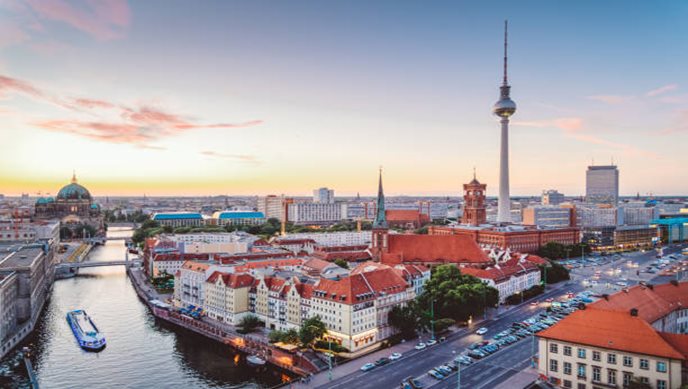
Foley Hoag will be partnering again with the European Society of International Law for its 2025 Annual Conference, happening at the Freie Universität in Berlin. This year’s theme, Reconstructing International Law, will be brought to life on various levels:
Institutional: Reconstruction will be a pressing issue on a practical level. The collective security system of the United Nations has had limited success in realizing its purpose in the war of aggression against Ukraine, the ongoing war in Gaza as well as in many other contexts. Reconstructing the authority of the UN's institutional structure will require creative thinking on the interplay of UN organs and the role of international law. Challenges of institutional reconstruction are not confined to the UN but also invite us to rethink institutional arrangements of other international organisations, including the WTO, the WHO, and the EU as well as their relationship with more informal governance arrangements.
Normative: The SDGs have contributed to changing the understanding of what development requires, but their true potential of transforming our world in the Global South and beyond remains unrealized. Reconstructing the promise of international development without replicating earlier mistakes and without giving in to powerful new actors with wide-ranging conceptions for global development will require thinking about the role of international law in realizing a just future for the world's population. The conference will offer a venue to critically accompany as well as support other political processes leading to a new blueprint for development in 2030.
Historical: How has international law fared after past major systemic crises? At various moments in the history of international law, it was necessary to embrace a new form of international law. What can we learn from institutional and normative projects of (re-)constructing "new" international law in the past?
Theoretical: Reconstructing international law cannot mean a return to outdated progress narratives. The insights from Critical Legal Studies and Third World Approaches cannot and should not be unlearnt. This implies that the authority and legitimacy of international law need to be reconstructed in a manner as inclusive as possible and with input from a wide variety of theoretical approaches.
Associates Matei Alexianu and Hannah Sweeney will be participating on a panel as part of a Pre-Conference Workshop of the Interest Group on International Environmental Law, presenting their paper on Non-State Actors & International Climate Adjudication.
We use cookies to enhance user experience, improve functionality and performance, and for analysis of website traffic. By clicking “accept”, you agree to the use of cookies. For more information about our cookie policy and the information we collect, please review our Privacy Statement.
Foley Hoag
Email Disclaimer
Transmitting information to us by e-mail unilaterally does not establish an attorney-client relationship or impose an obligation on either the law firm or even the receiving lawyer to keep the transmitted information confidential. By clicking "OK," you acknowledge that we have no obligation to maintain the confidentiality of any information you submit to us unless we already represent you or unless we have agreed to receive limited confidential material/information from you as a prospective client. Thus, if you are not a client or someone we have agreed to consider as a prospective client, information you submit to us by e-mail may be disclosed to others or used against you.
If you would like to discuss becoming a client, please contact one of our attorneys to arrange for a meeting or telephone conference. If you wish to disclose confidential information to a lawyer in the firm before an attorney-client relationship is established, the protections that the law firm will provide to such information from a prospective client should be discussed before such information is submitted. Thank you for your interest in Foley Hoag.